UV Protection 101: Stop Fading Floors, Furniture, and Artwork With the Right Window Film
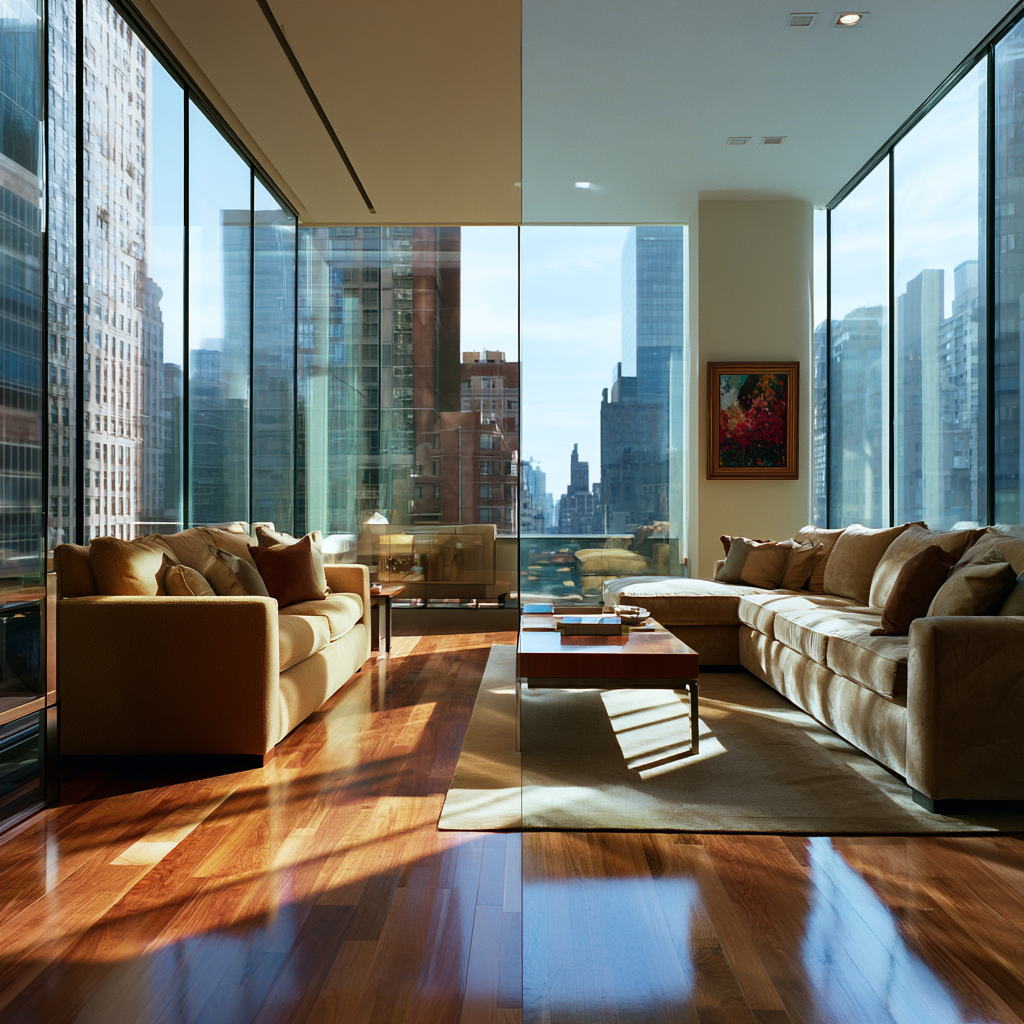
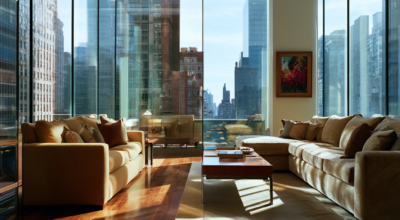
Sun fading happens when UV and high‑energy visible light break molecular bonds in dyes, wood lignin, and clear‑coat binders, while heat and humidity swings accelerate oxidation and microcracking. You can see measurable changes in weeks on textiles and prints, and in months to a few years on floors and rugs—especially near south/west windows. Install spectrally tested window film that blocks ≥99% UV through 380–400 nm (99.9% cuts residual UV about 10×), then balance VLT and TSER. Next, you’ll see how to choose between clear and tinted, and room-specific setups.
What Causes Sun Fading in Your Home?
Why do your floors, furniture, and artwork lose color fastest in the sunniest rooms? You’re seeing photodegradation: UV photons break molecular bonds in dyes, wood lignin, and polymer binders, triggering oxidation and irreversible color shifts. High sunlight exposure also adds infrared heat, which accelerates chemical reactions and dries finishes, increasing microcracking. Visible light contributes too, especially blue wavelengths that energize pigments even when UV is reduced. Reflected light from glass and bright walls concentrates energy on horizontal surfaces, so rugs and floors take the brunt of it. Humidity swings amplify damage by expanding and contracting fibers and coatings. To interrupt this chain, you need a window film that blocks UV, attenuates high-energy visible light, and preserves coating durability without distorting daylight.
How Fast Do Floors, Fabric, and Art Fade?
You can see measurable fading in weeks on sunlit textiles and prints, while hardwoods and rugs often show noticeable color shift within months to a few years depending on exposure. The clock speeds up when you’ve got high UV/visible light intensity, long daily sun hours, direct south/west-facing windows, heat buildup at the glass, and dyes or finishes with low lightfastness. Once you know these typical timeframes and accelerators, you can target the highest-risk windows with the right film specs to dramatically slow the change.
Typical Fading Timeframes
How fast does sun exposure actually bleach out what’s inside your home? Without UV control, you can see measurable sun damage in weeks: bright rugs and sofa arms often show a shift in tone within 4–12 weeks, especially on high-saturation dyes. Hardwood and engineered floors typically reveal line-of-light patterns in 3–6 months, with deeper color drift over 12–24 months as lignin breaks down. Paper-based art and photos can lose contrast in 1–3 months; watercolor and textile art may shift even faster. Leather and veneers usually change within 6–18 months as finishes oxidize. These are practical planning windows for material aging: if you’re already noticing unevenness, you’re on the steep part of the curve.
Factors That Accelerate Fading
In practice, fading speed jumps when several stressors stack at once: intense direct sun (especially south- and west-facing glass), long daily exposure hours, and high interior temperatures that accelerate oxidation in dyes, wood lignin, and topcoats. You’ll see floors bleach first where beam angles linger; textiles desaturate where heat and UV concentrate; artwork shifts when pigments and binders photodegrade. Use these discussion ideas to audit your space’s fading factors and prioritize film specs beyond “UV 99%,” including IR rejection and visible light control.
- Direct-beam hotspots from low-angle afternoon sun
- Elevated glazing temperature from poor ventilation
- High-humidity cycles that crack finishes and expose fresh dye
- Cleaning chemistry that strips UV inhibitors from coatings
- Low-quality LEDs/halogens add short-wavelength energy
What Should UV Window Film Block: 99% or More?
When you compare UV window films, that “99% UV blocked” claim isn’t equivalent to 99.9%, and the gap can matter for long-term fading control. You’ll want to check which UV band the spec covers (UVA, UVB, or both), what transmission threshold defines “blocked,” and whether the number is tied to a recognized standard and lab method (for example, spectrophotometer-based testing). Next, you can use those testing details to judge whether a film’s rating reflects real installed performance or marketing rounding.
99% Vs. 99.9% UV
Although 99% UV rejection sounds “close enough,” that last fraction matters because UV damage compounds over years of daily exposure. A 99% film still passes 1% UV; 99.9% passes 0.1%, a 10× reduction in residual dose. When you track fading metrics, that delta can translate into noticeably slower color shift on textiles, hardwood finishes, and pigments, especially near high-glare glass. If you’re investing in UV protection, prioritize the highest UV block you can get without compromising your visual goals (daylight, clarity, reflectivity) or install constraints. Use 99.9% when you’re protecting irreplaceable or high-value items, or when sun hours are extreme.
- Residual UV dose per day
- Artifact/pigment sensitivity
- Sun-hours and orientation
- Edge-seal and adhesive stability
- Visible-light appearance targets
Standards And Testing Methods
How do you know a “99% UV” claim actually holds up on your glass? You verify it with standards testing that reports UV transmittance across 280–400 nm, not a single wavelength. Ask for third‑party lab data using spectrophotometry and referenced methods (ASTM or ISO) that specify sample prep, glass type, and film orientation. You’ll want results shown as percent blocked (or percent transmitted) for UVA and UVB, plus the cut‑off behavior near 380–400 nm where fading risk remains.
For innovation-minded buyers, treat documentation as your two-word discussion ideas: “spectral curve” and “aging protocol.” Accelerated weathering (heat, humidity, light) checks whether UV rejection holds after installation, not just on day one.
Which Window Film Specs Matter (UV, VLT, Heat)?
Why do some “UV films” still leave your floors and artwork looking washed out? Because UV protection alone doesn’t stop Sun fading driven by visible light and heat. You need to read the spec sheet like an engineer and balance protection with daylight, comfort, and optics.
- UV rejection (%): target 99%+ up to 380–400 nm; confirm test method.
- VLT (visible light transmission): higher keeps rooms bright; lower reduces fading load but darkens views.
- TSER (total solar energy rejected): better comfort and lower thermal stress on finishes.
- IR rejection: useful for perceived heat reduction; verify wavelength range stated.
- Haze/clarity + reflectance: low haze preserves artwork detail; manage reflectivity for aesthetics.
Window Film vs Blinds: What Protects Better?
Where do blinds actually win against window film—and where do they fall short? Blinds give you controllable shading and can block direct beam sunlight when fully closed, helping in peak exposure windows. But they’re position-dependent: any tilt gap leaks UV and high-energy visible light, so protection varies hour to hour and room to room. That inconsistency shortens fade duration predictions and accelerates uneven material aging on floors and textiles.
Window film protects at the glass, continuously, regardless of occupant behavior. You’ll reduce UV transmission across the entire pane, including areas blinds can’t seal at edges. Film also protects when blinds are open for daylighting and views. If you need repeatable conservation performance, film delivers the more reliable baseline.
Clear vs Tinted UV Window Film: Will It Darken Rooms?
When you add UV window film, will your room actually get darker? It depends on visible light transmission (VLT). Clear films target UV with high VLT, so you’ll keep daylight and a neutral room mood. Tinted films cut UV plus a portion of visible light, so you’ll see clearer glare control, lower peak brightness, and a mood shift toward cooler, calmer spaces.
- Check VLT: 70–90% stays bright; 40–60% noticeably dims
- Compare specs: UV rejection can stay 99% in both types
- Tune glare: tint reduces contrast washout on screens
- Balance heat: lower solar gain without blinds-up caveats
- Prototype: sample strips at different times to predict mood changes
Best Window Film for Artwork (No Color Shift)
How do you protect a prized print or painting from UV without shifting its whites, skin tones, or shadow detail? Choose an optically clear, spectrally selective window film engineered for high UV Blocking (≥99% to 380 nm) while keeping visible light transmission high and neutral. You’ll want a low-haze, low-distortion construction with a neutral-reflectance profile, so highlights don’t warm and blacks don’t lift. Prioritize films tested to ISO 4892 or comparable accelerated aging for Color Stability, plus a stable acrylic adhesive that won’t yellow at the edge line. For Artwork Preservation, target the full UV band and also reduce short-wave violet where many dyes are sensitive. Specify a warranty that covers optical clarity, then validate with a before/after colorimeter reading.
Best UV Window Film for Each Room
Artwork-safe film starts with neutral color and high UV blocking, but each room forces different tradeoffs between glare control, heat rejection, privacy, and nighttime reflectivity. Choose a room specific window film by mapping exposure, viewing angles, and finish performance so you maximize fade prevention without compromising usability.
- Living room: spectrally selective film for UV blocking plus low haze to preserve views and reduce glare.
- Home office: matte/low-reflective film to cut screen glare while keeping color-critical work stable.
- Bedroom: dual-reflective or privacy film to reduce daytime visibility without a mirror-box feel at night.
- Kitchen: hard-coat, easy-clean film with strong UV blocking and moderate heat rejection near appliances.
- Bathroom: frosted UV-rated film for privacy plus fade prevention on textiles and finishes.
DIY vs Pro Install: Cost, Lifespan, Care
Why does installation method matter as much as the film itself? Because edge sealing, wetting solution ratio, and squeegee pressure determine optical clarity and UV-block continuity. DIY cuts labor costs, but you’ll spend more time on surface prep, dust control, and razor trimming; errors cause bubbles, light scatter, and premature peel. A pro install costs more upfront, yet typically extends service life through heat-shrinking, clean-room habits, and warranty-backed adhesion. Plan installation timing around low humidity and stable glass temperature to prevent hazing and slow cure. For care, you’ll wait 7–30 days before cleaning, then use ammonia-free sprays and soft microfiber to protect hardcoats. If you want innovation, ask for spectrally selective films and post-install IR scans—great discussion ideas.
Frequently Asked Questions
Can UV Window Film Be Removed Without Damaging Glass or Frames?
Yes, you can remove UV window film without damaging glass or frames—despite the film’s dramatic “I’m permanent” routine. Use controlled heat (steamer or heat gun on low), lift an edge with a plastic scraper, then peel slowly at a shallow angle. For removal techniques, keep the adhesive wet with soapy water or citrus-based remover, then razor-scrape on glass only. Prioritize frame safety by masking trim and avoiding solvents.
Will UV Film Affect Indoor Plants or Aquariums Near Windows?
UV film can affect indoor plants or aquariums near windows, but you can manage it with smart placement. Most films block UV while passing PAR, so plant compatibility usually stays high; shade-loving plants may even benefit. For high-light species, monitor growth and supplement with full-spectrum LEDs. In aquariums, reduced UV lowers algae pressure, but it can also cut natural sunlight—adjust photoperiod and heater settings. Maintain UV awareness year-round.
Is UV Window Film Safe for Double-Pane or Low-E Windows?
Yes—UV window film can be safe for double-pane and many low-e windows, but you must match the film to your glazing. Use exterior-rated film on sealed IGUs when manufacturers recommend it to manage heat buildup and avoid thermal stress. Verify the low-e coating location (surface #2 or #3) before installing. Choose products tested for UV protection and certified for Glass safety, and confirm warranty compatibility.
Does UV Window Film Interfere With Wi‑Fi, Cell Signals, or GPS?
Like Odysseus steering past the Sirens, you can avoid connectivity pitfalls: UV window film usually won’t interfere with Wi‑Fi, cell signals, or GPS. Most films target UV wavelengths, not RF, so UV interference isn’t the issue. However, metallized or low‑E‑style films can cause signal attenuation by reflecting RF. Choose non‑metallic ceramic, carbon, or spectrally selective film, and test signal strength near treated panes before full install.
Will UV Window Film Void My Window or Door Manufacturer Warranty?
It can, but you can avoid it with careful product and installer choices. Many manufacturers void coverage if you apply aftermarket film to insulated glass, because added solar absorption may increase seal stress and thermal break risk. Check your exact warranty considerations in writing, and use films rated for your glass type. Choose professional installation with documented specs, and prioritize removal safety: select adhesive systems designed for clean, non-damaging removal.
Conclusion
You can’t stop the sun, but you can stop its damage—anaphora that matters when you want floors, fabric, and art to stay true. Choose film that blocks ≥99% UV, then match VLT to daylight needs and solar heat specs to comfort goals. Use clear film where brightness is critical; use light tint where glare control helps. Pair film with shades for peak protection. Install cleanly, maintain gently, and you’ll slow fading for years.
 UV Protection 101: Stop Fading Floors, Furniture, and Artwork With the Right Window FilmSun fading happens when UV and high‑energy visible […]
 Office Glare, Be Gone: How Commercial Window Tint Boosts Comfort and ProductivityCommercial window tint cuts glare at the glass by […]
 Ceramic vs. Dual-Reflective vs. Dyed Film: Which Tint Is Right for Your Windows?Choose ceramic film if you want consistent infrared […]