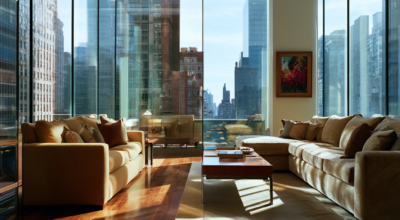
Sun fading happens when UV and high‑energy visible light break molecular bonds in dyes, wood lignin, and clear‑coat binders, while heat and humidity swings accelerate oxidation and microcracking. You can see measurable changes in weeks on textiles and prints, and in months to a few years on floors and rugs—especially near south/west windows. Install spectrally tested window film that blocks ≥99% UV through 380–400 nm (99.9% cuts residual UV about 10×), then balance VLT and TSER. Next, you’ll see how to choose between clear and tinted, and room-specific setups.
What Causes Sun Fading in Your Home?
Why do your floors, furniture, and artwork lose color fastest in the sunniest rooms? You’re seeing photodegradation: UV photons break molecular bonds in dyes, wood lignin, and polymer binders, triggering oxidation and irreversible color shifts. High sunlight exposure also adds infrared heat, which accelerates chemical reactions and dries finishes, increasing microcracking. Visible light contributes too, especially blue wavelengths that energize pigments even when UV is reduced. Reflected light from glass and bright walls concentrates energy on horizontal surfaces, so rugs and floors take the brunt of it. Humidity swings amplify damage by expanding and contracting fibers and coatings. To interrupt this chain, you need a window film that blocks UV, attenuates high-energy visible light, and preserves coating durability without distorting daylight.
How Fast Do Floors, Fabric, and Art Fade?
You can see measurable fading in weeks on sunlit textiles and prints, while hardwoods and rugs often show noticeable color shift within months to a few years depending on exposure. The clock speeds up when you’ve got high UV/visible light intensity, long daily sun hours, direct south/west-facing windows, heat buildup at the glass, and dyes or finishes with low lightfastness. Once you know these typical timeframes and accelerators, you can target the highest-risk windows with the right film specs to dramatically slow the change.
Typical Fading Timeframes
How fast does sun exposure actually bleach out what’s inside your home? Without UV control, you can see measurable sun damage in weeks: bright rugs and sofa arms often show a shift in tone within 4–12 weeks, especially on high-saturation dyes. Hardwood and engineered floors typically reveal line-of-light patterns in 3–6 months, with deeper color drift over 12–24 months as lignin breaks down. Paper-based art and photos can lose contrast in 1–3 months; watercolor and textile art may shift even faster. Leather and veneers usually change within 6–18 months as finishes oxidize. These are practical planning windows for material aging: if you’re already noticing unevenness, you’re on the steep part of the curve.
Factors That Accelerate Fading
In practice, fading speed jumps when several stressors stack at once: intense direct sun (especially south- and west-facing glass), long daily exposure hours, and high interior temperatures that accelerate oxidation in dyes, wood lignin, and topcoats. You’ll see floors bleach first where beam angles linger; textiles desaturate where heat and UV concentrate; artwork shifts when pigments and binders photodegrade. Use these discussion ideas to audit your space’s fading factors and prioritize film specs beyond “UV 99%,” including IR rejection and visible light control.
- Direct-beam hotspots from low-angle afternoon sun
- Elevated glazing temperature from poor ventilation
- High-humidity cycles that crack finishes and expose fresh dye
- Cleaning chemistry that strips UV inhibitors from coatings
- Low-quality LEDs/halogens add short-wavelength energy
What Should UV Window Film Block: 99% or More?
When you compare UV window films, that “99% UV blocked” claim isn’t equivalent to 99.9%, and the gap can matter for long-term fading control. You’ll want to check which UV band the spec covers (UVA, UVB, or both), what transmission threshold defines “blocked,” and whether the number is tied to a recognized standard and lab method (for example, spectrophotometer-based testing). Next, you can use those testing details to judge whether a film’s rating reflects real installed performance or marketing rounding.
99% Vs. 99.9% UV
Although 99% UV rejection sounds “close enough,” that last fraction matters because UV damage compounds over years of daily exposure. A 99% film still passes 1% UV; 99.9% passes 0.1%, a 10× reduction in residual dose. When you track fading metrics, that delta can translate into noticeably slower color shift on textiles, hardwood finishes, and pigments, especially near high-glare glass. If you’re investing in UV protection, prioritize the highest UV block you can get without compromising your visual goals (daylight, clarity, reflectivity) or install constraints. Use 99.9% when you’re protecting irreplaceable or high-value items, or when sun hours are extreme.
- Residual UV dose per day
- Artifact/pigment sensitivity
- Sun-hours and orientation
- Edge-seal and adhesive stability
- Visible-light appearance targets
Standards And Testing Methods
How do you know a “99% UV” claim actually holds up on your glass? You verify it with standards testing that reports UV transmittance across 280–400 nm, not a single wavelength. Ask for third‑party lab data using spectrophotometry and referenced methods (ASTM or ISO) that specify sample prep, glass type, and film orientation. You’ll want results shown as percent blocked (or percent transmitted) for UVA and UVB, plus the cut‑off behavior near 380–400 nm where fading risk remains.
For innovation-minded buyers, treat documentation as your two-word discussion ideas: “spectral curve” and “aging protocol.” Accelerated weathering (heat, humidity, light) checks whether UV rejection holds after installation, not just on day one.
Which Window Film Specs Matter (UV, VLT, Heat)?
Why do some “UV films” still leave your floors and artwork looking washed out? Because UV protection alone doesn’t stop Sun fading driven by visible light and heat. You need to read the spec sheet like an engineer and balance protection with daylight, comfort, and optics.
- UV rejection (%): target 99%+ up to 380–400 nm; confirm test method.
- VLT (visible light transmission): higher keeps rooms bright; lower reduces fading load but darkens views.
- TSER (total solar energy rejected): better comfort and lower thermal stress on finishes.
- IR rejection: useful for perceived heat reduction; verify wavelength range stated.
- Haze/clarity + reflectance: low haze preserves artwork detail; manage reflectivity for aesthetics.
Window Film vs Blinds: What Protects Better?
Where do blinds actually win against window film—and where do they fall short? Blinds give you controllable shading and can block direct beam sunlight when fully closed, helping in peak exposure windows. But they’re position-dependent: any tilt gap leaks UV and high-energy visible light, so protection varies hour to hour and room to room. That inconsistency shortens fade duration predictions and accelerates uneven material aging on floors and textiles.
Window film protects at the glass, continuously, regardless of occupant behavior. You’ll reduce UV transmission across the entire pane, including areas blinds can’t seal at edges. Film also protects when blinds are open for daylighting and views. If you need repeatable conservation performance, film delivers the more reliable baseline.
Clear vs Tinted UV Window Film: Will It Darken Rooms?
When you add UV window film, will your room actually get darker? It depends on visible light transmission (VLT). Clear films target UV with high VLT, so you’ll keep daylight and a neutral room mood. Tinted films cut UV plus a portion of visible light, so you’ll see clearer glare control, lower peak brightness, and a mood shift toward cooler, calmer spaces.
- Check VLT: 70–90% stays bright; 40–60% noticeably dims
- Compare specs: UV rejection can stay 99% in both types
- Tune glare: tint reduces contrast washout on screens
- Balance heat: lower solar gain without blinds-up caveats
- Prototype: sample strips at different times to predict mood changes
Best Window Film for Artwork (No Color Shift)
How do you protect a prized print or painting from UV without shifting its whites, skin tones, or shadow detail? Choose an optically clear, spectrally selective window film engineered for high UV Blocking (≥99% to 380 nm) while keeping visible light transmission high and neutral. You’ll want a low-haze, low-distortion construction with a neutral-reflectance profile, so highlights don’t warm and blacks don’t lift. Prioritize films tested to ISO 4892 or comparable accelerated aging for Color Stability, plus a stable acrylic adhesive that won’t yellow at the edge line. For Artwork Preservation, target the full UV band and also reduce short-wave violet where many dyes are sensitive. Specify a warranty that covers optical clarity, then validate with a before/after colorimeter reading.
Best UV Window Film for Each Room
Artwork-safe film starts with neutral color and high UV blocking, but each room forces different tradeoffs between glare control, heat rejection, privacy, and nighttime reflectivity. Choose a room specific window film by mapping exposure, viewing angles, and finish performance so you maximize fade prevention without compromising usability.
- Living room: spectrally selective film for UV blocking plus low haze to preserve views and reduce glare.
- Home office: matte/low-reflective film to cut screen glare while keeping color-critical work stable.
- Bedroom: dual-reflective or privacy film to reduce daytime visibility without a mirror-box feel at night.
- Kitchen: hard-coat, easy-clean film with strong UV blocking and moderate heat rejection near appliances.
- Bathroom: frosted UV-rated film for privacy plus fade prevention on textiles and finishes.
DIY vs Pro Install: Cost, Lifespan, Care
Why does installation method matter as much as the film itself? Because edge sealing, wetting solution ratio, and squeegee pressure determine optical clarity and UV-block continuity. DIY cuts labor costs, but you’ll spend more time on surface prep, dust control, and razor trimming; errors cause bubbles, light scatter, and premature peel. A pro install costs more upfront, yet typically extends service life through heat-shrinking, clean-room habits, and warranty-backed adhesion. Plan installation timing around low humidity and stable glass temperature to prevent hazing and slow cure. For care, you’ll wait 7–30 days before cleaning, then use ammonia-free sprays and soft microfiber to protect hardcoats. If you want innovation, ask for spectrally selective films and post-install IR scans—great discussion ideas.
Frequently Asked Questions
Can UV Window Film Be Removed Without Damaging Glass or Frames?
Yes, you can remove UV window film without damaging glass or frames—despite the film’s dramatic “I’m permanent” routine. Use controlled heat (steamer or heat gun on low), lift an edge with a plastic scraper, then peel slowly at a shallow angle. For removal techniques, keep the adhesive wet with soapy water or citrus-based remover, then razor-scrape on glass only. Prioritize frame safety by masking trim and avoiding solvents.
Will UV Film Affect Indoor Plants or Aquariums Near Windows?
UV film can affect indoor plants or aquariums near windows, but you can manage it with smart placement. Most films block UV while passing PAR, so plant compatibility usually stays high; shade-loving plants may even benefit. For high-light species, monitor growth and supplement with full-spectrum LEDs. In aquariums, reduced UV lowers algae pressure, but it can also cut natural sunlight—adjust photoperiod and heater settings. Maintain UV awareness year-round.
Is UV Window Film Safe for Double-Pane or Low-E Windows?
Yes—UV window film can be safe for double-pane and many low-e windows, but you must match the film to your glazing. Use exterior-rated film on sealed IGUs when manufacturers recommend it to manage heat buildup and avoid thermal stress. Verify the low-e coating location (surface #2 or #3) before installing. Choose products tested for UV protection and certified for Glass safety, and confirm warranty compatibility.
Does UV Window Film Interfere With Wi‑Fi, Cell Signals, or GPS?
Like Odysseus steering past the Sirens, you can avoid connectivity pitfalls: UV window film usually won’t interfere with Wi‑Fi, cell signals, or GPS. Most films target UV wavelengths, not RF, so UV interference isn’t the issue. However, metallized or low‑E‑style films can cause signal attenuation by reflecting RF. Choose non‑metallic ceramic, carbon, or spectrally selective film, and test signal strength near treated panes before full install.
Will UV Window Film Void My Window or Door Manufacturer Warranty?
It can, but you can avoid it with careful product and installer choices. Many manufacturers void coverage if you apply aftermarket film to insulated glass, because added solar absorption may increase seal stress and thermal break risk. Check your exact warranty considerations in writing, and use films rated for your glass type. Choose professional installation with documented specs, and prioritize removal safety: select adhesive systems designed for clean, non-damaging removal.
Conclusion
You can’t stop the sun, but you can stop its damage—anaphora that matters when you want floors, fabric, and art to stay true. Choose film that blocks ≥99% UV, then match VLT to daylight needs and solar heat specs to comfort goals. Use clear film where brightness is critical; use light tint where glare control helps. Pair film with shades for peak protection. Install cleanly, maintain gently, and you’ll slow fading for years.
Commercial window tint cuts glare at the glass by filtering incoming light with controlled VLT and low haze, so bright sky patches don’t wash out monitors or bounce off glossy desks. You’ll see steadier luminance, better screen contrast, and you can often run displays at lower brightness to reduce eye strain and headaches. Spectrally selective or dual-reflective films preserve daylight and views while limiting hotspots and UV fade. Keep going to see how to pick VLT and validate results.
How Does Commercial Window Tint Reduce Office Glare?
Why does glare spike the moment sunlight hits your screens and glass partitions? Commercial window tint cuts it by filtering and redirecting incoming light before it scatters across glossy surfaces. You’ll specify films with controlled visible light transmission (VLT) and low haze, so daylight stays usable while hotspots drop. Neutral or spectrally selective tints reduce reflected luminance, allowing displays to run at lower brightness and improve contrast. That supports office ergonomics: you won’t crane your neck, squint, or constantly reposition monitors. You’ll also stabilize illumination throughout the day, which reduces visual fatigue and errors. The productivity impact shows up in fewer interruptions, faster task completion, and more consistent meeting-room visibility on shared screens. Pair tint with calibrated interior lighting, and you’ll hit comfort targets without sacrificing daylight.
What Causes Glare in Offices With Big Windows?
When sunlight enters through large window walls, it creates glare because high-angle direct-beam light and bright sky luminance produce extreme contrast between the view plane and your task plane. Your eyes keep adapting between a bright facade and darker screens, so you feel squinting, headaches, and slower visual processing.
Glare spikes when glass has high visible transmittance, when desks face the glazing, and when polished floors or white desktops reflect specularly. Low sun angles also throw moving patches across monitors, forcing constant posture shifts that undermine office ergonomics. Open-plan layouts amplify the problem because you can’t easily control each workstation’s luminance balance. You’ll notice it more with large sky views, shallow overhangs, and minimal interior shading. These same sightlines can raise privacy concerns as exterior viewers gain long, unobstructed views into the interior.
Which Commercial Window Tint Types Cut Glare Best?
To cut office glare fast, you’ll typically choose between reflective films, dual-reflective tint options, and spectrally selective films based on your façade orientation and interior brightness targets. Reflective films deliver the strongest glare reduction in full sun, while dual-reflective tints preserve outward views and reduce the mirror look inside under low-light conditions. Spectrally selective films lower visible light transmission enough to control glare without sacrificing daylight or adding heavy reflectance, so you can balance comfort and productivity.
Reflective Films For Glare
How much glare can you eliminate without sacrificing daylight? With reflective films, you can cut harsh reflections while preserving usable visible light. These metalized layers bounce a controlled portion of incoming solar energy outward, delivering measurable glare reduction across open offices, conference rooms, and screen-heavy workstations. You’ll see fewer hotspots on monitors, sharper contrast on displays, and reduced squinting near south- and west-facing glass.
Specify performance by metrics, not guesswork: target lower visible light transmittance (VLT) to improve glare control, and check reflectance values to manage a mirror-like appearance. Pair that with high total solar energy rejection (TSER) to limit heat gain and stabilize HVAC loads. You’ll improve comfort and keep daylight distribution consistent, without changing your glazing system.
Dual-Reflective Tint Options
Where reflective films can feel too mirror-like from certain angles, dual-reflective tints give you tighter glare control without turning your façade into a one-way mirror. You get a higher-reflectance layer on the exterior to knock down harsh solar glare, while a lower-reflectance interior layer preserves a cleaner view for occupants.
Specify dual reflective when you need measurable glare reduction across open offices, conference rooms, and monitor-dense workstations. It stabilizes visual comfort by reducing luminance contrast at the glass, so screens wash out less and occupants squint less. You’ll also gain daytime privacy without creating a “mirror box” feel indoors. For best results, match visible-light transmission to task lighting and orientation, then validate with a pre-install glare study and post-install lux readings to ensure compliance.
Spectrally Selective Films
Why sacrifice daylight just to tame glare? Spectrally selective films let you keep bright, usable views while dialing down harsh hotspots that drive glare perception. You’ll target specific wavelengths—blocking infrared heat and a high share of UV—without over-darkening the glass, so spaces stay visually open and color-neutral.
- High spectral selectivity: filters IR/UV while transmitting visible light for clear daylighting.
- Controlled visible light transmission: reduces contrast and screen washout without “cave” vibes.
- Lower fading risk: UV rejection helps protect finishes, fabrics, and displays.
- Better energy efficiency: less solar heat gain cuts cooling loads and stabilizes indoor comfort.
Specify by SHGC, VLT, and UV rejection to match orientation and workstation layouts.
Glare Control vs Daylight: What VLT Should You Pick?
You can’t pick VLT for glare reduction alone—you need a value that cuts screen wash and eye strain while still delivering usable daylight for circadian and task needs. VLT percentages quantify how much visible light passes through the glass, so lower numbers control glare more aggressively while higher numbers preserve brightness and outside view. Next, you’ll map target VLT ranges to office use cases—screen-heavy workstations, collaborative areas, and perimeter offices—to hit comfort and productivity without over-darkening the space.
Balancing Glare And Daylight
How do you choose the right visible light transmission (VLT) when glare control and daylight both matter? You start by treating tint as a performance layer, not a cosmetic add-on. Effective glare management reduces screen washout and eye strain, while daylight balancing preserves useful ambient light so you don’t rely too heavily on electric lighting.
- Map glare zones by time of day and workstation orientation to target the highest-impact panes first.
- Specify film optics that cut harsh brightness and maintain neutral color so tasks stay visually accurate.
- Pair tint with automated shades or light shelves to modulate peaks without darkening the whole floor.
- Validate results with post-install readings: screen contrast, luminance uniformity, and occupant feedback.
You’ll deliver comfort, stability, and measurable productivity gains.
Understanding VLT Percentages
Where should VLT land when you need glare control without sacrificing usable daylight? VLT (Visible Light Transmission) is the percent of light your film lets through: higher VLT looks clearer; lower VLT looks darker. To dial in office comfort, you’re balancing screen visibility, eye strain, and daylight autonomy. Start by measuring problem glare at peak sun; if reflections drive squinting, you need a lower VLT. If the space already runs dim or relies on circadian-friendly daylight, you’ll want a higher VLT.
For most workspaces, mid-range VLT often delivers the best glare-to-daylight ratio, especially when paired with spectrally selective coatings that cut brightness and heat without over-darkening. You’ll improve comfort, focus, and energy performance.
VLT By Office Use
When should VLT skew lower for glare control, and when should it stay higher to protect daylight? Match VLT to task criticality, facade orientation, and screen density, then validate with field lux and contrast readings. Your VLT considerations should prioritize glare reduction without crushing circadian-supportive daylight.
- Screen-heavy zones (trading floors, open offices): target 10–25% VLT to cut veiling reflections and stabilize contrast ratios.
- Conference rooms (mixed-use): choose 20–35% VLT to balance presentation visibility with natural light for comfort.
- Perimeter private offices: use 30–50% VLT to preserve views while taming afternoon glare.
- Collaboration lounges/daylight cores: stay 40–70% VLT to maximize daylight autonomy and energy savings.
Commercial Window Tint vs Blinds: What Works Better?
Although both window tint and blinds can cut glare and improve privacy, they perform very differently in a commercial office environment. Tint delivers consistent glare mitigation across the full pane, so you don’t chase sunlight by adjusting slats. You also preserve daylight and outside views, which supports screen readability and reduces eye strain. Blinds create variable light bands and reflections, and they add hardware that collects dust and needs frequent cleaning and repairs.
For privacy benefits, tint scales better: you can choose VLT and finish (neutral, reflective, frosted) to match conference rooms, open plans, and perimeter offices without changing furnishings. Blinds can block views, but they can also telegraph “closed” spaces and hinder collaboration. If you want a cleaner, lower-maintenance, modern aesthetic, tint wins.
Can Window Tint Reduce Hot Spots and Temperature Swings?
Blinds can manage glare, but they don’t stop the solar heat that drives hot spots and daily temperature swings near perimeter windows. When you apply spectrally selective commercial window tint, you cut infrared gain while preserving daylight, so your HVAC doesn’t chase peaks and dips across the floorplate. You’ll feel steadier temps at desks closest to the glass and fewer thermostat battles between zones. Expect measurable energy savings, especially during the afternoon load.
- Reduce SHGC to flatten solar spikes without darkening interiors
- Improve mean radiant temperature, boosting perceived comfort
- Stabilize perimeter-zone demand, lowering reheat and fan cycling
- Address privacy concerns with neutral or dual-reflective finishes while maintaining consistent light transmission
Will Commercial Window Tint Help Screens and Headaches?
If screen glare is washing out your monitors, commercial window tint cuts incoming brightness and reflections so you can keep displays readable without cranking up the backlight. By stabilizing light levels and filtering harsh visible light, you’ll reduce squinting and eye strain that can trigger light-sensitive headaches. You get more consistent visual comfort across workstations, which supports longer focus time and fewer productivity-killing breaks.
Reduce Screen Glare
Why does your monitor seem to wash out the moment sunlight hits the glass, and why do your eyes feel strained by mid‑afternoon? Commercial window tint reduces visible light transmittance and suppresses specular reflections, so your displays maintain contrast without cranking up brightness. You’ll stabilize luminance across workstations while preserving office aesthetics and meeting privacy needs through selective reflectivity and neutral tones.
- Specify a low‑haze, spectrally selective film to reduce glare without darkening rooms.
- Target high‑angle façades first; they drive peak reflection into screens.
- Pair tint with monitor placement for tighter viewing angles and fewer hotspots.
- Validate results using lux mapping and screen contrast checks, then standardize across floors.
You’ll get clearer dashboards, fewer squints, and more consistent visual performance.
Ease Light-Triggered Headaches
How often does overhead sun or a bright window edge trigger a tight, pulsing headache while you’re trying to focus on a screen? That pain isn’t random—it’s your visual system overworking to adapt to high luminance contrast, reflections, and flicker-like glare. Commercial window tint stabilizes incoming daylight by cutting harsh peaks and diffusing hot spots, so your eyes don’t constantly re-accommodate.
With a more balanced light field, you’ll reduce squinting, dry-eye strain, and focus fatigue across long work blocks. You also gain better ambient comfort without darkening the space or sacrificing outside views. Pair tint with task lighting and monitor positioning, and you’ll create a predictable visual environment that supports sharper attention, fewer light-triggered headaches, and steadier productivity throughout the day.
UV Protection and Fade Control With Window Tint
During the workday, UV radiation can quietly damage interiors and undermine a professional office finish, even through standard glass. With commercial window tint, you engineer UV fade prevention into your workspace while maintaining daylight quality and reducing glare in screens and collaborative zones. Modern spectrally selective films block a high percentage of UVA/UVB light, slowing photochemical breakdown in fabrics, flooring, artwork, and branded displays, so your space looks newer for longer and requires fewer replacements.
- Specify films with verified UV rejection and documented test data.
- Target critical exposures: south/west elevations, atriums, and display walls.
- Pair visible-light transmission with task needs to prevent over-darkening.
- Validate results using a UV meter and periodic interior fade inspections.
Can Commercial Window Tint Lower HVAC Costs?
When exterior heat loads spike through your glazing, can commercial window tint measurably reduce HVAC runtime and demand charges? Yes—by lowering solar heat gain, tint reduces the cooling load your system must offset, so compressors cycle less and peak kW can drop. You’ll also stabilize perimeter-zone temperatures, which helps VAV boxes and thermostats avoid constant hunting and reheat. That control translates into predictable setpoints and fewer hot/cold complaints without overcooling the core. High-performance films deliver glare reduction while still admitting useful daylight, so you can limit blinds-down, lights-on behavior that adds internal heat. The combined effect is measurable energy savings: lower cooling ton-hours, smoother demand profiles, and improved ROI tracking through utility-interval data.
What to Expect During Commercial Window Tint Installation?
Energy savings from window film look great on paper, but you’ll only capture them if the install hits spec. You’ll start with a site survey that maps glass types, seal condition, and privacy factors, then you’ll schedule work to minimize disruption and protect furniture and flooring. Installers will clean and decontaminate the glazing, apply a slip solution, and squeegee film to eliminate particulates and edge lift. Expect curing time: adhesion stabilizes over days as moisture clears, so you’ll see temporary haze. You’ll confirm performance with post-install checks focused on office comfort, glare reduction, and uniform sightlines.
- Pre-install baseline readings (lux, surface temp)
- Precision cut and edge clearance verification
- Seam alignment and gasket-safe finishing
- Final walkthrough, care protocol, and warranty log
Frequently Asked Questions
Will Commercial Window Tint Affect Cell Phone or Wi‑Fi Signals?
Commercial window tint can affect signals, but you can minimize it. Metallic films may cause cell phone interference and measurable Wi-Fi signal impact by attenuating RF energy, especially with high-performance, low‑E coatings. Choose non‑metalized ceramic or spectrally selective films to preserve throughput while still delivering solar control. You’ll validate performance by running pre- and post-RSSI and throughput tests, then reposition access points or add mesh nodes where needed.
Is Commercial Window Tint Removable or Replaceable Without Damaging Glass?
Yes—you can remove or replace commercial window tint without damaging the glass when you use proper methods. Picture a hypothesis test: if adhesive releases under controlled heat, the glass stays unchanged; if you rush, the residue increases. Focus on removal considerations like film age, adhesive type, and edge sealing. Manage installation impact by using low-tack adhesives and applying squeegee pressure correctly. You’ll get clean glass, faster turnaround, and predictable re-tinting results.
Does Window Tint Impact Building Codes, Permits, or Landlord Approvals?
Yes—window tint can impact building codes, permits, and landlord approvals, so you can’t treat it as purely cosmetic. You should verify local regulations for glazing, reflectivity, and fire-safety compliance, as well as any zoning limits. Ask your landlord for written approvals and confirm lease requirements. If inspectors flag changes, you may need permits or updated occupancy permits. Work with a certified installer who documents specs and provides compliance-ready submittals for review.
How Long Does Commercial Window Tint Last Before Needing Replacement?
You can expect commercial window film to last about 10–20 years, depending on film type, sun exposure, and installation quality. Your window tint lifespan increases with premium sputtered or ceramic films and professional edge sealing. Plan replacement timing when you see bubbling, peeling, fading, adhesive haze, or reduced heat rejection. You’ll extend service life by using non-abrasive cleaning, maintaining seals, and choosing warranty-backed products rated for your façade’s orientation.
Can Commercial Window Tint Improve Office Privacy Without Darkening Rooms?
Yes—you can boost office privacy without noticeably darkening rooms. Studies show high-performance films can reject up to 99% of UV while maintaining high visible light transmission, so you keep brightness. Choose spectrally selective or ceramic-tinted engineered for privacy balance: it reduces inward visibility while preserving daylight. Add frosted or patterned options for light diffusion, breaking sightlines, and glare. You’ll get cleaner lines of sight, consistent luminance, and a modern aesthetic.
Conclusion
Commercial window tint lets you tame harsh glare without sacrificing the daylight your team needs. You’ll cut reflections on monitors, reduce squinting and headaches, and keep workspaces visually consistent across sunny hours. With the right VLT, you balance brightness and contrast while adding UV protection to slow interior fading. Tint also lowers solar heat gain, easing HVAC load and stabilizing temperatures. Why keep fighting blinds and constant screen adjustments when one film delivers measurable comfort and efficiency?
Choose ceramic film if you want consistent infrared heat and UV blocking, a low-reflection, neutral look, and stable night visibility. Pick dual-reflective when you need the strongest daytime glare reduction and outside-in privacy, but expect higher interior reflectance after dark. Use dyed film for basic light reduction on a tight budget, knowing it offers weaker heat control and may shift color over time. Confirm VLT code limits and certified adhesive or shatter-retention options. More comparisons follow.
Ceramic vs Dual-Reflective vs Dyed Tint (Quick Picks)
Wondering which tint type fits your windows fastest? For quick picks, start with your priorities: glare control, visibility, reflectivity, and install tolerance. In ceramic vs dual-reflective, ceramic film gives you a clean, low-reflection look and stable optics, so you’ll see fewer mirror-like artifacts at night. Dual-reflective film adds a reflective exterior face for daytime privacy, but you’ll want to verify interior reflectance so it doesn’t distract you after dark. If you’re optimizing cost and rapid rollout, dyed tint is the basic choice, yet it’s more prone to color shift and offers less consistent appearance across panes. For safety, choose products with certified adhesive performance, shatter-retention options, and documented scratch resistance.
Heat Rejection and UV Protection Compared
When comparing ceramic, dual-reflective, and dyed films, prioritize infrared heat rejection because it directly affects cabin temperatures and HVAC load. You’ll also want to verify UV blocking performance (UVA/UVB) to reduce skin risk and slow interior fading, since darkness alone doesn’t guarantee protection. Finally, you can’t ignore long-term durability—ceramic typically holds its IR/UV specs more consistently, while reflective layers and dyes may degrade faster under sustained sun exposure.
Infrared Heat Rejection
Although all three tint types can make your car feel cooler, they don’t manage heat the same way: ceramic film delivers the most consistent infrared (IR) rejection without relying on reflectivity, dual-reflective film cuts IR by reflecting and absorbing more solar energy (often with a shinier look), and dyed film typically offers the weakest IR performance because it mainly darkens visible light rather than blocking heat. If you’re weighing heat vs glare, focus on IR specs (TSER and IRR) rather than darkness alone. Higher IR rejection stabilizes cabin temps, reduces HVAC load, and supports energy savings in EV range or fuel use. Safety-wise, lower heat soak helps you stay alert and protects electronics from thermal stress. Dual-reflective can add interior reflections at night; ceramic keeps optics cleaner. Dyed fades sooner under high heat.
UV Blocking Performance
How much UV protection you get depends less on how dark the tint looks and more on the film’s chemistry and construction: ceramic and dual-reflective films typically deliver near‑total UVA/UVB blocking (often ~99%+) while also managing heat through IR/solar control, whereas dyed film can still block a lot of UV but varies more by brand and tends to prioritize visible-light reduction over sustained solar performance. If you’re protecting skin, eyes, upholstery, and dashboard polymers, target verified UV ratings, not shade. Ceramic film uses nano-ceramic particles in a ceramic coating matrix to absorb and attenuate UV without increasing reflective glare. Dual-reflective stacks add metal layers that can boost solar rejection and cut glare, but may raise interior reflections. Dyed film relies on absorptive dyes; you’ll want lab specs.
Long-Term Protection Durability
Durability is about whether a tint’s construction keeps delivering heat rejection and UV protection for years or slowly gives up performance under sunload. Ceramic films use non-metallic nano-ceramic particles, so you’ll typically get stable infrared rejection and consistent UV shielding with strong heat resistance, even as the adhesive ages. Dual-reflective films rely on layered metals; they can perform well at heat rejection, but oxidation, edge corrosion, or micro-scratches may reduce reflectivity and degrade performance over time, especially in coastal or humid climates. Dyed films start with absorption, so they’re more prone to fading and thermal stress; as the dye breaks down, your cabin protection and glare control can drift. For long-term durability, prioritize ceramic, then quality dual-reflective, and treat dyed as budget-friendly, short-term.
Glare Reduction and Daytime Privacy Compared
When you’re choosing among ceramic, dual-reflective, and dyed film, you need to compare glare control, because excessive brightness can reduce contrast and slow hazard detection. Ceramic typically cuts glare without adding a mirror-like exterior, dual-reflective can deliver the strongest daytime glare reduction by reflecting visible light, and dyed film usually offers the least consistent performance as it relies on absorption. For daytime privacy, dual-reflective generally gives you the highest outside-in concealment in bright conditions, while ceramic and dyed films tend to provide moderate privacy that drops as exterior light levels fall.
Glare Control Comparison
In bright sun or under harsh overhead lighting, glare control becomes a safety issue, not just a comfort upgrade, because veiling glare can mask hazards and strain your eyes. In this glare discussion, ceramic film cuts luminance without adding mirror-like reflections, so you keep stable contrast and color fidelity on high-definition displays and through windshields. Dual-reflective film aggressively reduces glare by reflecting a portion of visible light; it can feel “cooler” to your eyes, but the reflected light may bounce internally off angled glass, especially at night with headlights. Dyed film mainly absorbs light, so glare reduction depends heavily on darkness and can fade over time, reducing consistency. Across privacy angles, treat reflectivity as an optical variable, not the primary lever here.
Daytime Privacy Levels
How much daytime privacy you actually get depends less on “shade” and more on visible light transmission (VLT) and reflectance—two parameters that also change how safely you see out. Lower VLT raises daytime privacy but can also reduce contrast in overcast conditions or shaded streets if you go too dark.
Dyed film primarily reduces VLT with minimal reflectance, so it limits inward visibility without adding mirror-like glare, but it can fade and may deliver weaker glare cutting. Dual-reflective film boosts outward reflectance, maximizing daytime privacy at moderate VLT; however, it can increase exterior reflectivity and create harsher privacy vs.-glare trade-offs at low sun angles. Ceramic film relies on selective absorption and IR rejection, so you can keep higher VLT, preserve outward visibility, and still manage glare safely.
How Each Window Tint Looks (Inside vs Outside)
Visually, what changes once you apply ceramic tint, dual-reflective film, or dyed film to your windows? From inside, ceramic typically looks neutral and low-haze, so your color perception stays consistent while you track a clear glare comparison across sun angles. Dual-reflective reads slightly darker and more contrasty indoors, which can sharpen silhouettes but may reduce visibility in shadowed intersections. Dyed film often adds a warmer cast and can make dashboards and screens look flatter, so they may seem dimmer.
From the outside, the ceramic keeps the window aesthetics understated with minimal mirrors. Dual-reflective shows a controlled metallic sheen that varies by viewing angle and lighting, increasing reflectivity. Dyed appears uniformly dark with fewer highlights, emphasizing shade over shine.
Ceramic Window Film: Best Strengths and Trade-Offs
Appearance tells you what you’ll live with day to day, but ceramic film earns its reputation on performance: it rejects heat effectively with low reflectivity, so you keep a more natural view while cutting solar load. Ceramic coatings use non-metallic, nanoscale particles to block infrared energy while maintaining a stable color and consistent visible light transmission. Compared with dyed film, you’ll get stronger heat control and better UV rejection, which helps protect interiors and reduce skin exposure risk. You also avoid signal interference risks sometimes associated with metalized layers. Trade-offs: ceramic typically costs more, and ultra-high-clarity versions can reveal installation defects if prep isn’t meticulous. It won’t deliver mirror-like reflectivity, so privacy gains rely more on darkness than on sheen.
Dual-Reflective Film: Where It Works Best
Where does dual-reflective film make the most sense—especially when you need daytime privacy without turning your windows into mirrors from the street? You’ll get the best results on residential or commercial glass, where the exterior reflectance stays moderate while the interior side is more reflective, balancing curb appeal and glare control.
Use Dual reflective window tints on west- and south-facing elevations to cut harsh afternoon luminance and improve visual comfort without overly darkening the room. They’re a strong fit for storefronts, offices, and street-level living spaces because they reduce solar gain and screen interiors from passersby in bright conditions. For safety, pair them with tempered or laminated glass and verify visible light transmission meets code, then confirm night conditions, since interior reflectance can increase when inside lighting dominates.
Dyed Window Tint: When It’s Worth It
Dual-reflective film targets glare and daytime privacy with controlled reflectance, but dyed window tint makes sense when you want a low-reflection look and a budget-friendly way to reduce brightness without changing the exterior sheen much. You’ll trade some heat rejection versus ceramic and some glare cutting versus dual-reflective, yet you’ll gain a clean, OEM-style finish that won’t distract drivers or neighbors.
Use dyed tint when you need practical safety improvements fast: less squinting, fewer mirror-like reflections, and more consistent visibility through the glass. In a budget comparison, it’s the entry point for modern light management.
- A sunlit commute where dashboards stop glowing
- A street-facing office that stays readable
- A nursery window that softens midday glare
Durability, Fading, and Warranty Differences
Over time, what separates ceramic, dual-reflective, and dyed tint isn’t just comfort—it’s how well each film holds its color, adhesion, and performance under constant UV and heat cycling. Ceramic uses non-metal, nano-scale particles, so you’ll typically see the least fading, stable IR rejection, and lower risk of signal interference, with strong scratch-resistant hardcoats. Dual-reflective relies on layered metalized stacks; it can stay color-stable but may show edge corrosion or delamination if moisture reaches seams. Dyed films absorb heat; that accelerates color shift, haze, and adhesive breakdown, especially on high-exposure glass. These durability tradeoffs affect safety: degraded film can distort visibility and increase glare scatter. Read warranty nuances closely—coverage often excludes installation errors, edge bubbling, or chemical damage.
Best Tint for Home, Office, and Car (Rules + Budget)
Because tint laws and daylight needs change by setting, the “best” film depends on your use case: ceramic usually delivers the safest all-around heat and UV control with minimal glare side effects, dual-reflective makes sense when you need strong daytime privacy and exterior reflectivity (and you can manage nighttime mirror-like reflections), and dyed film typically fits only the lowest-budget installs where short service life and weaker heat rejection don’t create safety or comfort issues. Match film to rules, budget, and Subtopic relevance, not hype. Use two-word discussion ideas like “visible transmittance” and “IR rejection” to compare specs.
- Home: Choose ceramic to reduce HVAC load while preserving color accuracy and emergency egress visibility.
- Office: Use dual-reflective for glare control and lobby privacy; verify nighttime sightlines and code compliance.
- Car: Start with legal VLT; ceramic boosts comfort without blinding reflectance, while dyed stays entry-level.
Frequently Asked Questions
Will Window Tint Interfere With Wi‑Fi, Cell Signal, or GPS Reception?
Window tint can interfere, but only certain metallic or dual‑reflective films noticeably weaken Wi‑Fi, cellular, or GPS signals. You’ll see the biggest window signal drop when the tint includes conductive layers that act like a partial Faraday shield, causing device interference. Ceramic and quality dyed films usually stay RF‑transparent, so your connectivity remains stable. For safety, test reception before full install, keep sensors clear, and choose specs with documented RF performance.
Can I Apply Any of These Films to Double‑Pane or Low‑E Glass?
You can, but you must match the film to the glass—measure twice, cut once. On double‑pane units, choose exterior-rated or low‑absorption films to avoid heat buildup that can crack seals; ceramic coatings usually run coolest and still deliver strong UV protection. On low‑e glass, avoid highly reflective dual‑reflective films unless the manufacturer approves them, as they can overstress the coatings. Always verify IGU warranty and SHGC limits.
How Do I Clean Tinted Windows Without Damaging the Film or Adhesive?
Clean tinted windows with a soft microfiber cloth and an ammonia‑free, alcohol‑free cleaner; mist the cloth, not the glass, to protect edges. Use gentle, vertical strokes and avoid abrasive pads or razor blades. For adhesive care, keep moisture out of seams and don’t soak squeegee passes near borders. As cleaning tips go, ceramic and dual‑reflective films tolerate heat better than dyed films, but all films require pH‑neutral solutions.
Is Exterior‑Mounted Tint an Option for Windows That Can’t Be Tinted Inside?
Yes—exterior tint can work when you can’t apply film inside. Picture harsh sun slicing across the glass; you mount the film outdoors to block heat and glare at the source. You’ll trade longevity for access: weathering, abrasion, and seal-edge failure rise, so you need UV-stable, scratch-resistant laminates and tight edge sealing. Compare options carefully against mounting limitations, local codes, and safety glazing requirements.
How Long After Installation Should I Wait Before Rolling Down Car Windows?
Wait 3–5 days before you roll down your car windows; in cold or humid weather, wait 7–14 days. That installation timing lets the adhesive outgas and fully cure, reducing edge lift and scratching. Compared with rushing it, waiting improves long-term bond strength and visibility into safety. If you need durable alternatives, choose higher-stability films and request edge sealing, but you should still avoid operating windows early. Follow the installer specs.
Conclusion
Choose ceramic when you need maximum heat and UV blocking without changing your view; choose dual-reflective when you want strong glare control and daytime privacy while keeping night visibility safer; choose dyed when you need basic shading on a tight budget. Compare specs, not shade—VLT, IR rejection, UV rating, and warranty length. Install it right, keep it compliant, and maintain it well to reduce fading, delamination, and driving or occupancy risk.